_edited.jpg)
Locked Jaw (Trismus)
Why does my jaw lock,? What causes a locked jaw?
Specialist Physiotherapy for Locked Jaw, Trismus and Jaw Pain
There are several possible reasons why your jaw may lock or become difficult to open. A locked jaw can be associated with temporomandibular disorders (TMD), muscle spasm or overactivity, changes within the jaw joint, trauma, dental procedures, inflammation or infection. The cause is important because treatment depends on why your jaw is becoming restricted.
At Midlands Jaw Physiotherapy, we assess the movement of your jaw, the muscles and joints involved, and the factors that may be contributing to your restricted movement. Where appropriate, physiotherapy can help reduce pain, restore movement and improve jaw function.
Important: A rapidly developing or severe restriction in mouth opening, particularly when associated with swelling, infection, trauma or other unusual symptoms, may require urgent medical or dental assessment rather than routine physiotherapy.
Do these symptoms sound familiar?
You may notice:
-
Your jaw suddenly feels stuck
-
You cannot open your mouth as wide as usual
-
Difficulty eating larger or harder foods
-
Pain when trying to open your mouth
-
Your jaw catches during opening or closing
-
Your jaw locks open or closed
-
Clicking or popping before the jaw started locking
-
Jaw stiffness, particularly in the morning
-
Pain around the jaw joint or muscles
-
Headaches or facial pain alongside your jaw symptoms
-
A reduced mouth opening can have several different causes, so an assessment is important if the problem is persistent, worsening or significantly affecting your ability to eat or function.
If several of these symptoms sound familiar, a specialist assessment can help identify the underlying cause and guide the most appropriate treatment.
What is "Locked Jaw"?
What is a locked jaw?
"Locked jaw" is a term commonly used to describe difficulty moving or opening the jaw normally.
Clinically, restricted mouth opening is often referred to as trismus.
The restriction can develop gradually or appear suddenly, and the underlying cause can vary considerably.
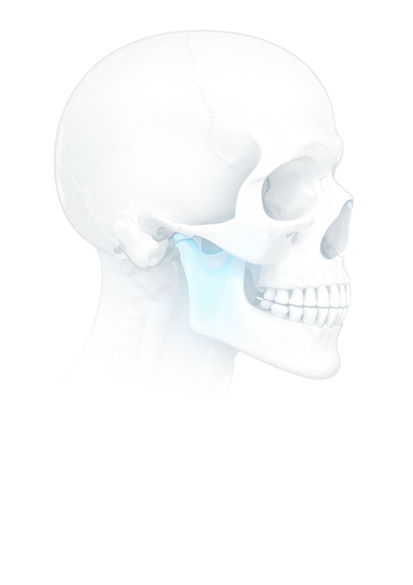
For some people, the jaw feels stiff and difficult to open because the muscles are painful or overactive. For others, movement may be restricted because of a problem affecting the temporomandibular joint or the structures within it.
A jaw that feels "stuck" is therefore not a diagnosis in itself, it is a symptom that needs to be assessed in context.

Why Does My Jaw Lock?
There are several possible causes
Temporomandibular disorders (TMD)
TMD can affect the jaw muscles, the temporomandibular joint or both.
Pain, inflammation and altered movement within the joint can sometimes lead to restricted jaw opening or episodes of locking. Difficulty opening the mouth is a recognised symptom of TMD.
Muscle spasm and overactivity
The muscles responsible for opening and closing the jaw can become painful, tight or overactive.
This can make opening the mouth feel restricted even when there isn't a mechanical obstruction within the joint.
Disc displacement
A small cartilage disc sits inside the temporomandibular joint and helps it move smoothly.
In some people, changes in the position or movement of this disc can be associated with clicking and, in some circumstances, episodes where the jaw becomes difficult to open.
Trauma
An injury to the jaw, face or head can affect jaw movement.
A recent injury accompanied by restricted opening should be assessed appropriately, particularly if there is significant pain, swelling or suspected fracture.
Dental or surgical procedures
Temporary restriction in jaw opening can occur following some dental procedures or surgery.
If the restriction develops following dental treatment, your dentist or the relevant healthcare professional should be involved in determining the cause.
Infection or inflammation
Dental or facial infections can sometimes cause significant trismus.
Significant trismus associated with a dental infection requires urgent assessment, particularly where there is facial swelling, difficulty swallowing or concern about the airway.
Can a Locked Jaw be Caused by Teeth Grinding?
It can be associated with it, but teeth grinding isn't the only possible cause.
Bruxism and prolonged jaw clenching can increase the activity and load placed on the muscles and joints involved in chewing.
For some people this contributes to pain, muscle fatigue and restricted movement.
If you're experiencing both teeth grinding and a locked or restricted jaw, it's useful to assess both problems rather than treating them separately.
What is the difference between a locked jaw and a dislocated jaw?
A locked jaw usually describes restricted movement where the person cannot open or move their jaw normally.
A dislocation is different. It occurs when the jaw joint moves out of its normal position and may result in the mouth becoming stuck open.
A jaw that is dislocated and stuck open requires assessment and appropriate clinical management rather than trying to force it back into position yourself. Having a diagnosis of an "open lock" would require oral and maxillofacial assessment. This referral should be completed via your GP, or if it is an acute open lock, attendance at A&E may be required.
Can Physiotherapy Help with Locked Jaw?
Sometimes - but the cause matters!!
Physiotherapy can be useful when restricted jaw movement is related to TMD, muscle pain, muscle overactivity or other musculoskeletal contributors.
Treatment may include:
-
🎓 Education and reassurance
-
🌸 Gentle jaw mobility exercises
-
🤲 Manual therapy
-
🏋 Advice about modifying aggravating activities
-
🤕 Management of associated headaches and neck pain
-
💆♀️ Treatment of the jaw and associated neck muscles
-
🧘 Strategies to reduce excessive clenching
-
🔄 Movement retraining
-
🎯 Gradual restoration of normal jaw function
The 2024 Royal College of Surgeons guidance for painful TMD recommends approaches including physiotherapy, mobility exercises and therapeutic exercise, with evidence that these approaches can reduce pain and improve jaw movement.
However, physiotherapy isn't appropriate for every cause of trismus. If your jaw has become rapidly or severely restricted, particularly following trauma or alongside swelling, infection or other concerning symptoms, you may need assessment by your dentist, GP or an oral and maxillofacial specialist first.
What Should I do if My Jaw Suddenly Locks?
If your jaw suddenly locks... don't try to force your jaw open or repeatedly stretch into severe pain.
For a mild episode associated with known TMD, reducing aggravating activities and temporarily choosing softer foods may help while symptoms settle. NHS guidance also recommends avoiding wide yawning and excessive chewing when experiencing TMD symptoms.
However, seek urgent medical or dental advice if:
-
You cannot eat or drink
-
You have significant facial or dental swelling
-
You have difficulty swallowing or breathing
-
The restriction developed after significant trauma
-
Your mouth opening is rapidly getting worse
-
You have severe or unusual pain
-
You have other concerning symptoms
These features can indicate a problem requiring urgent assessment rather than routine TMD management.
When Should I Seek Treatment?
Consider an assessment if:
-
Your jaw repeatedly locks or catches
-
You cannot open your mouth normally
-
Your mouth opening is gradually becoming smaller
-
You're avoiding certain foods because of your jaw
-
Locking is accompanied by pain
-
You have associated clicking, headaches or ear symptoms
-
Your symptoms are affecting your daily life
A rapid reduction in mouth opening warrants a more urgent assessment, particularly when accompanied by pain or other concerning features.
Myths About Locked Jaw
Myth: A locked jaw always means the disc is out of place.
Fact: Restricted jaw movement can have several causes, including muscle-related problems, TMD, trauma, inflammation and other conditions. An assessment is needed to understand what's happening.
Myth: I should force my jaw open if it feels stuck.
Fact: Forcing a painful or acutely restricted jaw can aggravate symptoms. The appropriate approach depends on why the jaw is restricted.
Myth: A locked jaw will always require surgery.
Fact: Many TMD-related jaw problems are managed conservatively, and physiotherapy, education and therapeutic exercises are recommended components of conservative TMD care.
Myth: If my jaw has locked once, it will keep happening.
Fact: Not necessarily. The underlying cause, contributing factors and response to treatment all influence whether symptoms recur.
10 Frequently Asked Questions About Locked Jaw
Related Symptoms
It is rare for only one symptom to occur with TMD. Jaw clicking is often just a component of the overall condition.
Explore our other specialist resources:
Let's Work Together
If jaw clenching or teeth grinding is affecting your daily life, we're here to help.
At Midlands Jaw Physiotherapy, we provide specialist assessment and evidence-based treatment for jaw disorders, helping you understand the cause of your symptoms and develop a personalised treatment plan.
✅ 60-minute specialist assessment
✅ No GP referral needed
✅ Individual treatment plan
Why choose Midlands Jaw Physiotherapy?
✅ Exclusive focus on jaw, facial and neck conditions
✅ Independent Prescriber
✅ Medical Botulinum Toxin when appropriate
✅ HCPC & CSP Registered
✅ Evidence-based treatment
✅ Personalised rehabilitation programmes