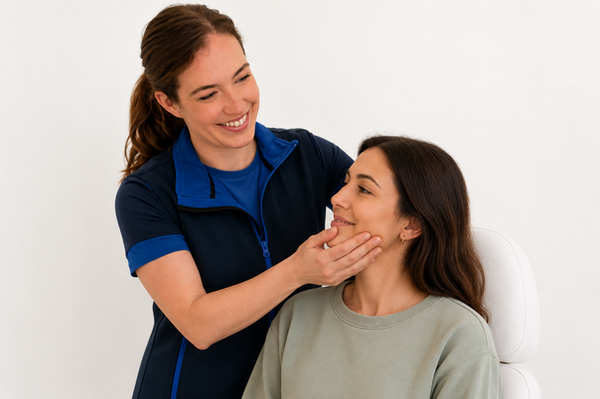

Facial Palsy Physiotherapy
Specialist Physiotherapy for Facial Palsy and Post-Surgical Facial Asymmetry
Facial weakness or changes in facial movement can have a significant impact on how you eat, drink, speak, communicate and express yourself. They can also affect your confidence and how you feel about your appearance.
Facial palsy can develop suddenly, such as with Bell's palsy or Ramsay Hunt syndrome, or may occur following surgery, trauma or other conditions affecting the facial nerve.
At Midlands Jaw Physiotherapy, I specialise in the assessment and rehabilitation of facial movement disorders. I work with people experiencing both acute and long-standing facial palsy, as well as facial asymmetry following surgery or other procedures.
Treatment is individually tailored to your facial movement, symptoms, stage of recovery and goals. Where appropriate, this may include specialist facial exercises, movement retraining, relaxation techniques, education and medical botulinum toxin treatment.
Do these symptoms sound familiar?
-
Weakness or reduced movement on one side of your face
-
Difficulty closing one eye fully
-
Changes in your smile or facial expression
-
Difficulty eating or drinking
-
Speech or articulation changes
-
Facial tightness or stiffness
-
Unwanted facial movements or twitching
-
Synkinesis, where one facial movement causes another unwanted movement
-
Facial asymmetry following surgery
-
Changes in facial movement following treatment for a tumour or other medical condition
-
Difficulty controlling individual facial movements
-
Changes in facial appearance that are affecting your confidence
Facial movement can change significantly during recovery, and the symptoms you experience may vary depending on the cause, stage of recovery and structures affected.
If you're experiencing persistent facial weakness, unwanted facial movements or facial asymmetry following surgery, a specialist assessment can help determine the most appropriate rehabilitation approach.
What is Facial Palsy?
Facial palsy is weakness or paralysis of the muscles of the face caused by temporary or permanent damage to the facial nerve (cranial nerve VII). Most people experience facial weakness on one side of the face (unilateral facial palsy), although in rare cases both sides can be affected (bilateral facial palsy).
The facial nerve controls facial expression, eye closure, speech, eating and drinking, and contributes to tear and saliva production. Damage to this nerve can therefore have a significant impact on everyday life.
Causes of Facial Palsy
Facial palsy occurs when the signal between the facial nerve and the facial muscles is disrupted. There are many possible causes, and identifying the underlying cause helps determine the most appropriate treatment.
Bell's Palsy
Bell's palsy is the most common cause of facial palsy. Although the exact cause remains unknown, it is thought to result from inflammation of the facial nerve, often triggered by a viral infection. The swelling of the nerve within the narrow facial canal temporarily disrupts the nerve signals to the facial muscles.
Ramsay Hunt Syndrome
Ramsay Hunt Syndrome is caused by reactivation of the varicella zoster virus (the virus responsible for chickenpox and shingles).
Symptoms may include:
-
Facial weakness or paralysis
-
Painful blisters or a rash around the ear, scalp, mouth or nose
-
Hearing loss
-
Tinnitus (ringing in the ear)
-
Dizziness or vertigo
Not everyone experiences all of these symptoms, so diagnosis is based on the overall clinical picture.
Bacterial Infections
Certain bacterial infections can affect the facial nerve, including:
-
Lyme disease
-
Middle ear infections (otitis media)
Traumatic Injury
Facial palsy may occur following injuries such as:
-
Skull fractures (particularly the temporal bone)
-
Facial fractures
-
Traumatic brain injuries
These injuries are commonly associated with road traffic collisions, falls, sporting accidents or assaults.
Neurological Conditions
Some neurological disorders can affect the facial nerve, including:
-
Neurofibromatosis Type 2
-
Guillain-Barré Syndrome
Birth Trauma
Facial palsy can occur during childbirth if pressure or forceps cause temporary injury to the facial nerve. Most babies recover well over time.
Congenital Facial Palsy
Some babies are born with facial palsy due to abnormal development of the facial nerve or facial muscles during pregnancy.
Stroke
Although a stroke can cause facial weakness, it is not a facial nerve injury. The cause and treatment are very different, making urgent medical assessment essential.
Facial Asymmetry Following Surgery
Changes in facial appearance or movement can sometimes occur following surgery involving the jaw, face, head or neck. These changes may be temporary during the healing process or may persist once the initial recovery period has passed.
I work with patients experiencing facial asymmetry following procedures such as jaw replacement surgery, orthognathic or other jaw surgery, and surgery to remove head and neck or facial tumours.
Depending on the type and location of surgery, changes may be related to swelling, scarring, changes in muscle function, altered movement patterns or involvement of the facial nerve and surrounding tissues. Some people may notice differences in their smile, facial expression, jaw movement or the way the two sides of their face move together.
How can physiotherapy help?
A detailed assessment can help identify the factors contributing to your facial asymmetry and determine which areas may benefit from rehabilitation.
Treatment may include:
-
Facial movement assessment and retraining
-
Exercises to improve coordination and control of facial movements
-
Techniques to reduce excessive muscle activity or unwanted movements
-
Scar and soft-tissue management where appropriate
-
Advice and exercises following jaw surgery or reconstruction
-
Assessment of associated jaw, neck or shoulder symptoms
-
Strategies to improve facial symmetry and function during everyday activities
For some patients, particularly where there is persistent unwanted muscle activity or imbalance between the two sides of the face, medical botulinum toxin may form part of a wider treatment plan. This would only be considered following an appropriate assessment and where clinically appropriate.
The aim of rehabilitation is not simply to change how the face looks, but to improve movement, function and confidence following surgery.
Classifying Facial Palsy
Facial nerve injuries are classified according to the degree of damage.
First Degree (Neuropraxia)
The nerve is bruised but remains intact.
-
Excellent prognosis
-
Full recovery is common
-
Recovery typically occurs within 6–8 weeks
Second Degree (Axonotmesis)
The nerve fibres are damaged, but the outer covering of the nerve remains intact.
-
The nerve must regenerate
-
Recovery usually takes several months
-
Physiotherapy can help optimise recovery during this period
Third Degree (Neurotmesis)
The facial nerve has been severely damaged or completely divided.
-
Surgical repair is often required
-
Recovery depends on the extent of the injury and timing of treatment
How We Assess Facial Palsy
At Midlands Jaw Physiotherapy, we use the Sunnybrook Facial Grading System to assess facial function.
This internationally recognised assessment measures:
-
Resting facial symmetry
-
Voluntary facial movement
-
Synkinesis (unwanted facial movements)
A score is calculated between:
-
0 = Complete facial paralysis
-
100 = Normal facial function
Your score is reassessed at each appointment to monitor progress and guide your treatment programme.
What Do the Facial Muscles Do?
The facial muscles are unique because they attach directly to the skin rather than to bones. They allow us to communicate emotion, protect our eyes, eat, drink and speak.
Examples include:
-
Frontalis – raises the eyebrows
-
Orbicularis oculi – closes the eyes
-
Corrugator and procerus – produce a frown
-
Zygomaticus and risorius – create a smile
-
Levator labii superioris – lifts the upper lip
-
Orbicularis oris – puckers the lips
-
Depressor labii inferioris and depressor anguli oris – pull the mouth downwards
-
Nasalis – wrinkles the nose

Every person's facial movement pattern is slightly different, which is why rehabilitation should always be tailored to the individual.Working with a physiotherapist who has specialist knowledge of facial anatomy and movement can significantly improve the quality of your recovery.
What You Should Do If You Develop Facial Palsy
If you develop a sudden facial droop, seek urgent medical attention by calling 999, attending A&E, or contacting your GP immediately.
The priority is to determine whether the symptoms are due to a stroke or a facial palsy.
A useful clinical difference is:
-
Unable to raise the eyebrow on the affected side → more suggestive of a facial palsy.
-
Able to raise both eyebrows normally despite lower facial weakness → may suggest a stroke and requires urgent emergency assessment.
Only a healthcare professional can make this distinction, so never attempt to diagnose yourself.
Once a stroke has been excluded, treatment for Bell's palsy usually includes:
-
A 10-day course of corticosteroids (prednisolone), ideally started within 72 hours of symptom onset.
-
Antiviral medication if Ramsay Hunt Syndrome is suspected.
-
Eye protection, including lubricating drops during the day, ointment at night and advice on taping the eye closed if it cannot fully close.
Most people begin to notice some return of movement within a few weeks, although recovery varies depending on the severity of the nerve injury.
If your recovery is slow or incomplete, specialist facial rehabilitation can help optimise your outcome.
If, at any stage, your affected eye becomes red, painful or increasingly irritated, seek urgent assessment from an eye specialist or your local eye emergency department.
How Can Physiotherapy Help With Facial Palsy
Physiotherapy cannot speed up the healing of the facial nerve itself. However, specialist rehabilitation plays an important role in ensuring the recovering nerve and muscles work together as effectively as possible.
Treatment may include:
-
Detailed facial assessment
-
Education about recovery
-
Individualised facial exercises
-
Neuromuscular retraining
-
Massage and soft tissue techniques
-
Stretching for tight muscles
-
Advice on eye care
-
Management of muscle tightness and unwanted facial movements
-
Progress monitoring using the Sunnybrook Facial Grading System
Our aim is to help you regain natural, symmetrical facial movement while reducing the risk of long-term complications.
Hyperkinesis
Hyperkinesis refers to excessive or involuntary muscle activity that can develop as the facial nerve heals. Muscles may feel tight or overactive, making facial movements appear exaggerated or strained.
Hyperkinesis may occur on either the affected or unaffected side of the face.
Synkinesis
Synkinesis is the involuntary movement of one facial muscle when attempting to move another.
For example:
-
Your eye closes when you smile.
-
Your cheek tightens when you blink.
-
Your neck muscle contracts when you pucker your lips.
This occurs because regenerating nerve fibres reconnect to the wrong muscles during healing.
Unlike hyperkinesis, synkinesis only occurs on the affected side of the face.
Specialist facial physiotherapy focuses on retraining these abnormal movement patterns to improve facial control and function.
Frequently Asked Questions
Related Symptoms
Explore our other specialist resources:
Let's Work Together!
If facial palsy or facial assymmetry is affecting your daily life, we're here to help.
At Midlands Jaw Physiotherapy, we provide specialist assessment and evidence-based treatment and rehabilitation for people with acute and long term facial assymmetry, helping you understand the the best course of treatment to enable optimised recovery.
✅ 60-minute specialist assessment
✅ No GP referral needed
✅ Individual treatment plan
Why Choose Midlands Jaw Physiotherapy...
✅ Exclusive focus on facial palsy, jaw and neck conditions
✅ Independent Prescriber
✅ Medical Botulinum Toxin when appropriate
✅ HCPC & CSP Registered
✅ Evidence-based treatment
✅ Personalised rehabilitation programmes