_edited.jpg)
Jaw Pain - Clicking Jaw
Specialist Physiotherapy for Jaw Pain, Clicking, Locking and Headaches
Jaw clicking is one of the most common symptoms affecting the temporomandibular joint (TMJ).
For some people it is simply an occasional click with no pain, while for others it may be accompanied by discomfort, locking or difficulty eating.
Although jaw clicking can sound alarming, it does not always indicate a serious problem. Understanding why your jaw clicks is the first step in deciding whether treatment is needed.
At Midlands Jaw Physiotherapy, we specialise in assessing jaw disorders and identifying the underlying cause of your symptoms, allowing us to develop an individual treatment plan when appropriate.
Do these symptoms sound familiar?
Many people with a clicking jaw experience more than just the noise itself.
You may notice:
-
A clicking or popping sound when opening your mouth
-
Clicking when chewing
-
Your jaw occasionally catching or sticking
-
Pain around the jaw joint
-
Ear pain or fullness
-
Headaches around the temples
-
Difficulty opening your mouth fully
-
Jaw stiffness in the morning
-
Neck pain alongside jaw symptoms
-
Clicking that has gradually become painful
If several of these symptoms sound familiar, a specialist assessment can help determine whether your jaw is functioning normally or whether treatment may be beneficial.
What Causes a Clicking Jaw?
Jaw clicking is most commonly caused by changes in the way the structures inside the jaw joint move together.
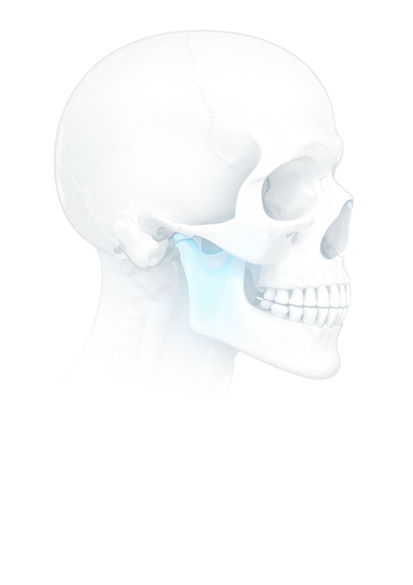
The jaw joint is made up of several important structures including the joint surfaces, a small cartilage disc, ligaments and surrounding muscles. Normally these structures move smoothly together each time you open and close your mouth.
When this movement becomes disrupted, a clicking sound may occur.
Several different factors can contribute.
Disc Displacement
One of the most common causes of jaw clicking is movement of the
cartilage disc inside the joint.
Normally the disc sits between the bones, helping the joint move
smoothly.
If the disc moves slightly forwards, the jaw may "click" as the disc
returns to its normal position during opening. A second click may
sometimes be heard when closing the mouth.
This is known as disc displacement with reduction and is one of
the most common joint-related causes of jaw clicking.

Muscle Tension
Sometimes the muscles around the jaw become overactive through habits such as clenching, grinding or prolonged tension.
Although the muscles themselves do not usually create the clicking sound, increased muscle tension can alter the way the jaw moves, making existing joint problems more noticeable or contributing to discomfort.
Hypermobility
Some people naturally have more flexible joints throughout their body.
In these individuals, the jaw joint may move slightly further than usual, sometimes creating a clicking or clunking sensation without causing pain.
Arthritis
Changes within the joint caused by osteoarthritis can occasionally alter the smooth movement of the joint surfaces, leading to grinding sensations or clicking alongside stiffness and discomfort.
Previous Injury
Previous trauma to the jaw, face or neck may affect how the joint moves and can sometimes contribute to clicking developing later.
Is Jaw Clicking Normal?
Many people worry that any clicking means something is seriously wrong.
Fortunately, this is not always the case.
Jaw clicking without pain
A painless clicking jaw is relatively common.
Many people experience occasional clicking without any pain or restriction of movement and never require treatment.
In these cases, reassurance and monitoring may be all that is needed.
Jaw clicking with pain
If clicking is accompanied by pain, headaches, difficulty chewing or reduced jaw movement, it may indicate that the joint or surrounding muscles are becoming overloaded.
Assessment can help determine which structures are contributing to your symptoms.
Jaw locking
If your jaw occasionally becomes stuck open or closed, or you find it increasingly difficult to open your mouth fully, this may suggest that the disc is no longer moving normally.
Jaw locking should always be assessed by a clinician with expertise in temporomandibular disorders.
A sudden change in symptoms
If your jaw suddenly begins clicking after an injury, or if a long-standing painless click becomes painful, it is sensible to arrange an assessment to determine why your symptoms have changed.
How Can Physiotherapy Help?
Not everyone with a clicking jaw requires treatment.
The first step is identifying whether the clicking is simply a normal variation or whether it is associated with changes in joint movement, muscle function or pain.
At Midlands Jaw Physiotherapy, your assessment looks beyond the click itself.
We assess how your jaw joints, muscles, neck and daily habits are contributing to your symptoms before developing an individual treatment plan.
Treatment may include:
-
🎓 Education
-
🤲 Manual therapy
-
🏋 Exercises
-
💉 Botulinum toxin
-
🌿 Dry Needling
-
🧠 Habit modification
-
📈 Rehabilitation
The goal is not simply to stop the clicking. In many cases, the aim is to reduce pain, improve function and restore confidence in using your jaw.
If your jaw has progressed from clicking to becoming stuck or difficult to open, visit our Locked Jaw (Trismus) page.
Myths About Clicking Jaws
Myth: Clicking always means something is damaged.
Fact: Many people have painless clicking that doesn't require treatment
Myth: If my jaw clicks, it must need surgery.
Fact: Most people with jaw clicking are managed successfully without surgery.
Myth: I should stop moving my jaw.
Fact: Gentle, normal movement is usually encouraged
Myth: Jaw clicking will always get worse.
Fact: Many people remain stable for years, while others improve with appropriate management.
10 Frequently Asked Questions About Jaw Clicking
Related Symptoms
It is rare for only one symptom to occur with TMD. Jaw clicking is often just a component of the overall condition.
Explore our other specialist resources:
Why choose Midlands Jaw Physiotherapy?
✅ Exclusive focus on jaw, facial and neck conditions
✅ Independent Prescriber
✅ Medical Botulinum Toxin when appropriate
✅ HCPC & CSP Registered
✅ Evidence-based treatment
✅ Personalised rehabilitation programmes